Leadership Development Programmes
Explore how MI's Leadership Development Programmes build students' skills across three key dispositions, over three years.
Our Vision
MI aims to develop leaders who exemplify consciousness of self and others as well as demonstrate commitment and care in bringing about positive change.
Student Leadership Development in MI
MI focuses on three key dispositions that will guide the key outcomes of student leadership development through different student development experiences.
Consciousness (“Knowing self and others”) refers to learning about one’s character strengths, values, talents, skills, interests, passion and needs of self, as well as others, to effect positive change.
Commitment (“I can and I will”) refers to demonstrating the will and drive to serve others through a collective effort.
Care (“Inspiring positive change”) refers to taking action to improve the well-being of self and others.
Key outcomes of student leadership development
Level Focus for PU1-3
PU1 - Grounding Year | PU2 - Building Year | PU3 - Emerging Year |
Consciousness | Commitment | Care |
• Recognise the importance of developing one’s character strengths, values, talents, skills, interests and passion, in order to achieve personal leadership and positive influence | • Recognise the importance of leadership in rallying, initiating, organising, and building networks and relationships to implement change | • Take initiative to promote positive change in the community |
• Develop motivation to create positive influence through serving others | • Apply problem solving and interpersonal communication skills to work effectively with others to build a shared vision | • Show commitment to promote a collaborative and supportive environment among peers |
Key Student Leadership Development Platforms
MI provides different platforms and opportunities through a tiered approach of student leadership development. All students will develop leadership competencies through classroom lessons and CCA experiences. Students who show interest in serving various school communities will have further opportunities to develop their leadership skills by fostering positive change through service to others.
The Students' Council
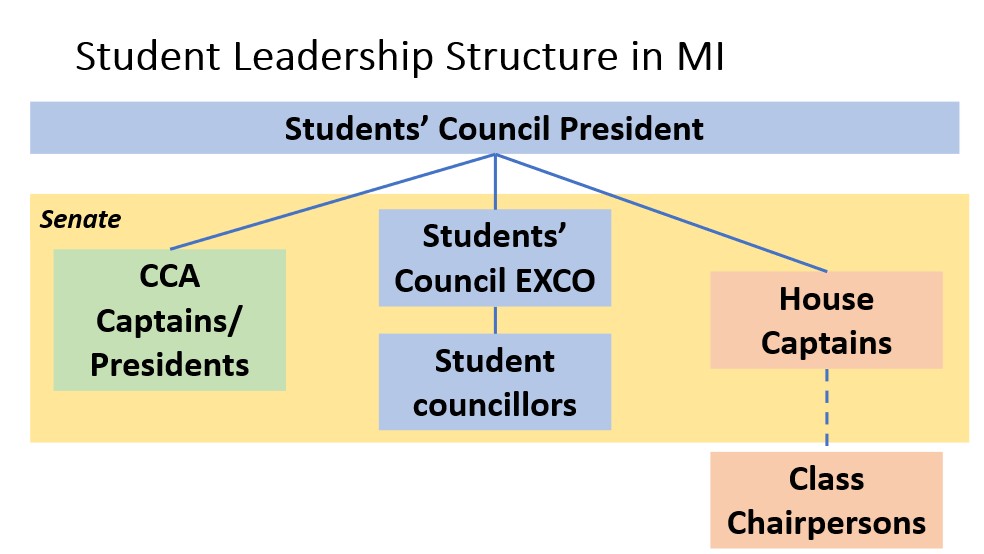
The Students’ Council is the apex of student leadership in MI. It offers student councillors an array of action platforms to grow their leadership competencies through the planning and implementation of Institute-wide events. Simultaneously, the Students' Council – as representatives of the student body – play a critical role in advocating for, and speaking with, the diverse members of the school community. Student apply to run for the Students’ Council and are elected through voting by the student body.
The Senate
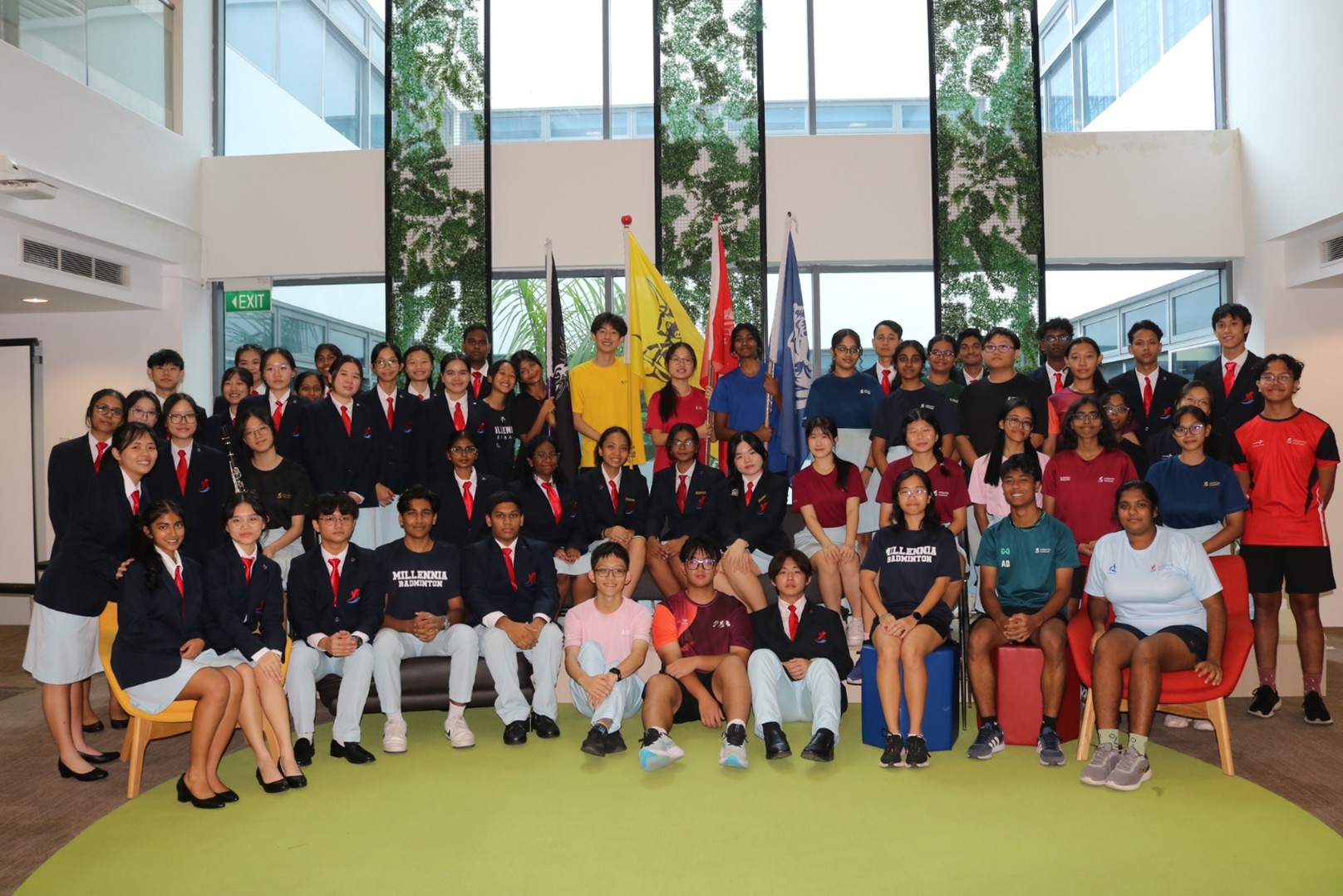
The Senate includes all student councillors, House captains and CCA Captains and Presidents. They serve to raise and discuss issues relating to student matters and seek to promote positive change through projects that promote a collaborative and supportive environment among peers.
Houses
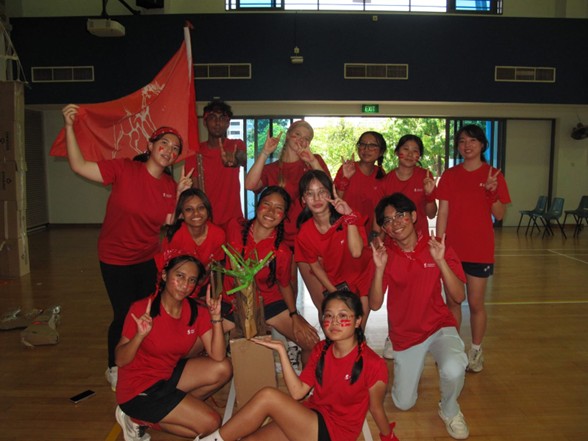
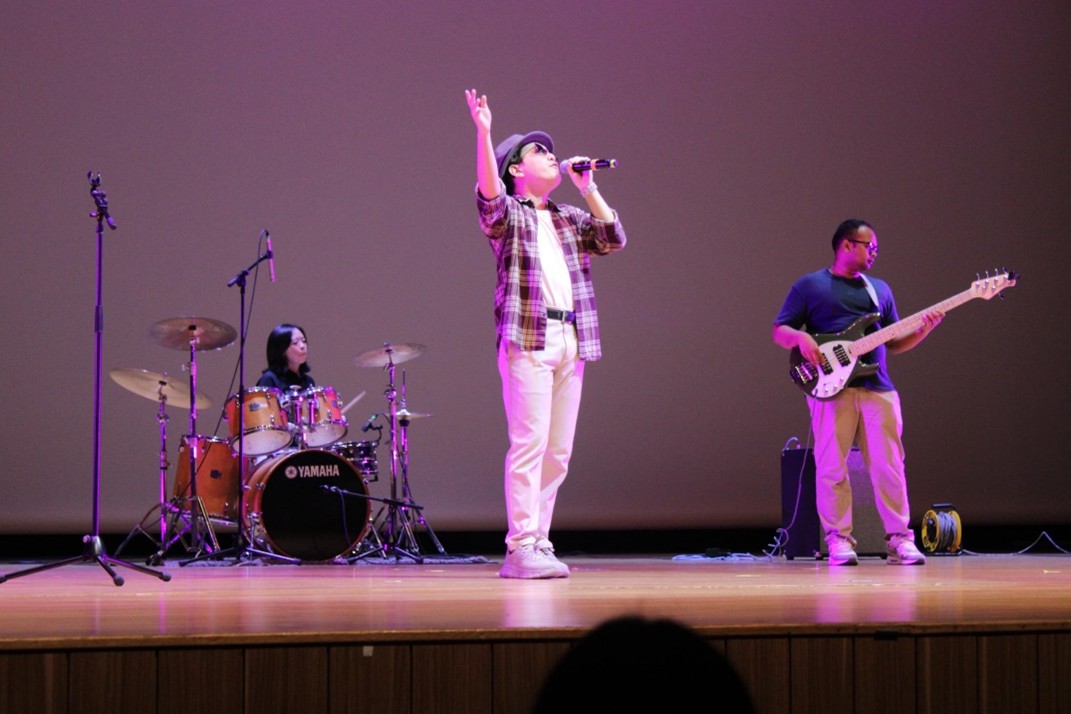
The four Houses in MI are Garnet, Onyx, Sapphire, Zircon. The MI House system promotes healthy competition, school spirit and bonding among students. It also encourages positive interactions between seniors and juniors. House leaders are guided by House masters to conceptualise and organise House-based activities such as Sports Fiesta and Transcendence.


Key Highlights
Student Leadership Experience
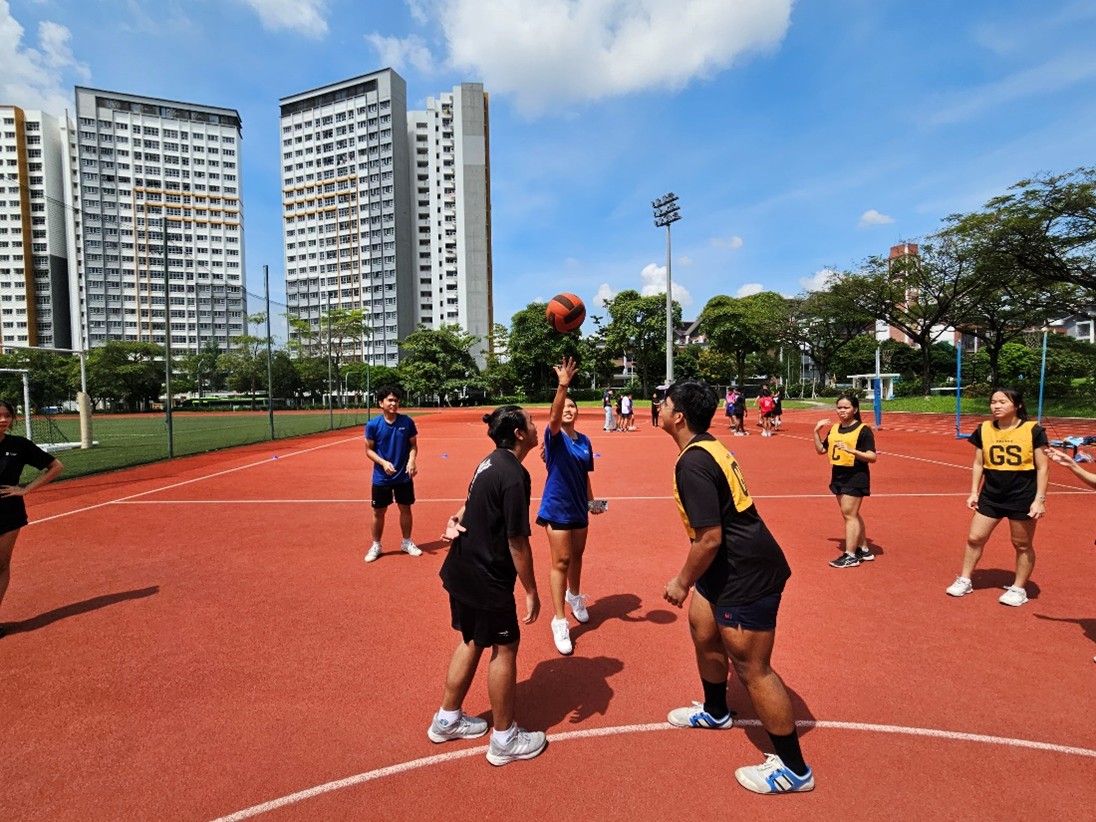
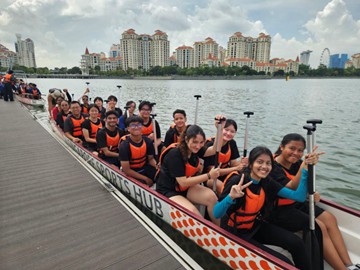
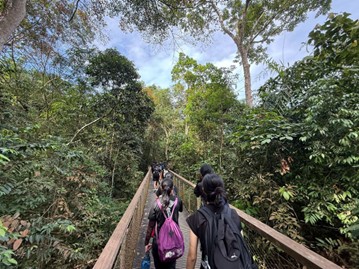
This annual event is specially designed for potential CCA and House leaders, and PU1 student councillors. During this event, students participate in both indoor and outdoor team building activities to build and strengthen their collaboration, communication and management skills. After the event, students extend their learning when they apply these skills in planning and executing their CCA action plans. Some student leaders also step up and exercise their leadership skills in the planning and execution of PU1 bonding related activities in the following year.
Student-Initiated Projects
Platforms are provided for student leaders at the school level and beyond, to develop and hone their leadership skills through engagement in authentic projects. Student leaders are guided by teacher-mentors to conceptualise and organise school activities and events. Examples of such activities and events include PU1 Orientation, SIP Showcase, Gap Week and Teachers’ Day.